
Alcohol use disorder is common, yet medications remain substantially underused.
In 2024, an estimated 27.9 million people aged 12 and older had past-year AUD, and only about 2.5% received medication treatment.
The treatment gap has many causes, including stigma, patient readiness and preferences, clinician familiarity, access and cost, and broader treatment-system barriers. Many people still assume the only two paths are white-knuckle willpower or a church-basement meeting.
There are three medications the FDA has approved for drinking, plus a couple more that doctors prescribe off-label.
They work in completely different ways. Your goal, whether that is to stop completely, cut back, or put a hard barrier between yourself and the next drink, is one part of the choice, alongside your health history and other medications.
People search for this as "medication for alcoholism," though clinicians now call it alcohol use disorder, or AUD. If you want the deeper background on the most-used option first, there's a full explainer on how naltrexone works and how to start it.
No medication here is a cure, and none works for everyone. For a lot of people, though, the right one lowers the odds of a return to heavy drinking by enough to change how the next year goes.
Which medications for alcohol use are actually approved for alcohol use disorder?#
Three: naltrexone, acamprosate, and disulfiram. Disulfiram was first FDA-approved in 1951, oral naltrexone in 1994 and acamprosate in 2004, and each one attacks the problem from a different direction.
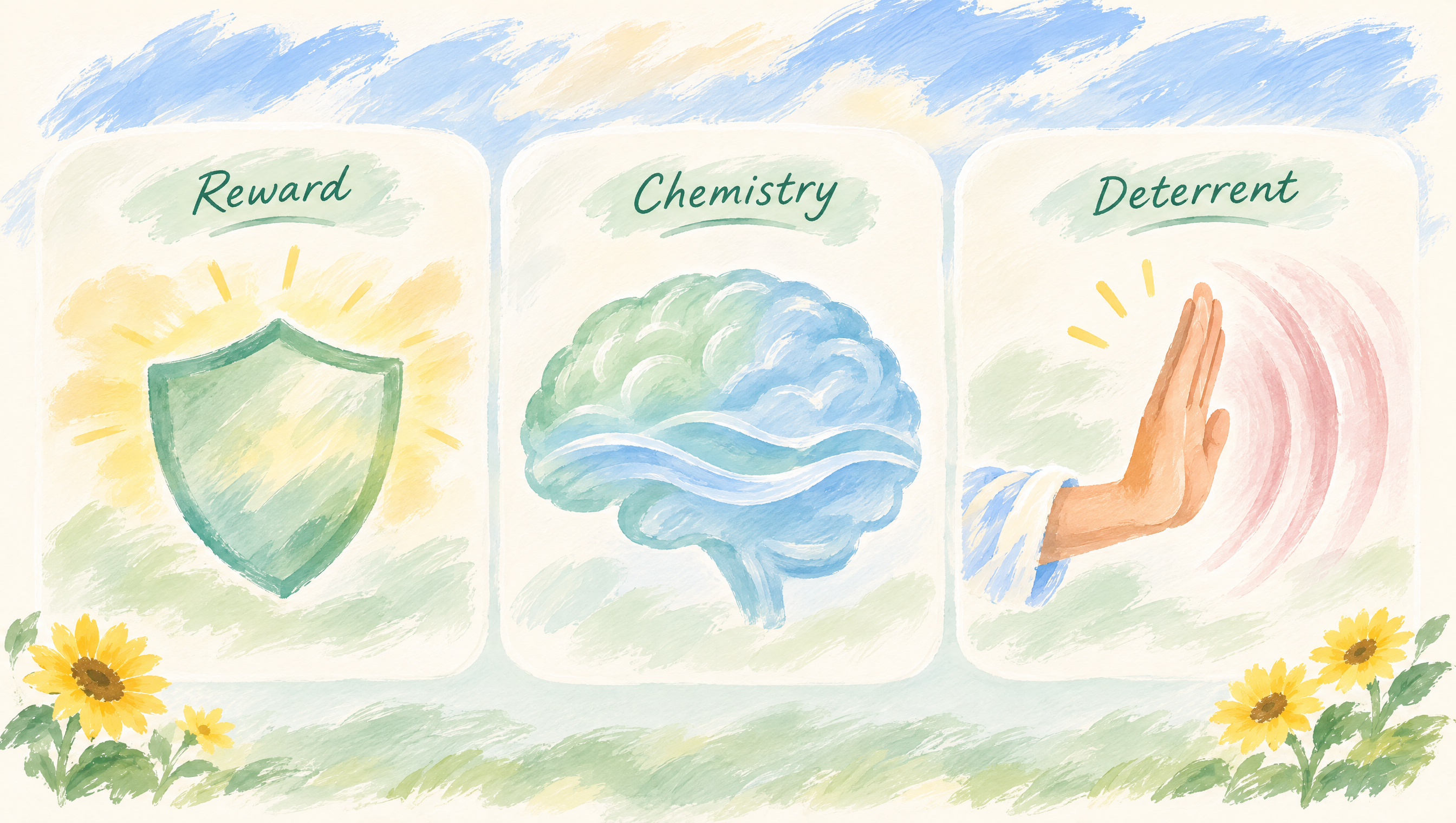
Naltrexone blunts the reward you get from alcohol, so drinking starts to feel like less of a payoff. Acamprosate is thought to act on brain chemistry altered by long-term drinking, and is used to help people who have already stopped stay stopped. Disulfiram does something stranger, making you physically ill if you drink, so the pill itself becomes the reason not to.
Two more, topiramate and gabapentin, aren't FDA-approved for drinking but come up often, because guidelines now support them: VA/DoD recommends topiramate as a first-line option alongside naltrexone, while gabapentin is suggested when first-line drugs can't be used, and the APA suggests both when naltrexone or acamprosate aren't effective or preferred (more on those below).
Naltrexone and acamprosate are the two with the deepest research behind them. A 2023 JAMA review found oral naltrexone (50 mg/day) and acamprosate each reduced the return to drinking, and naltrexone also reduced heavy drinking. Injectable naltrexone had weaker evidence, though it reduced drinking days, and it may suit people who struggle to take a daily pill.
Naltrexone: the option for cutting back#
Naltrexone is often the first medication worth asking about, especially if your goal is to drink less rather than quit outright. It's an opioid antagonist, which sounds unrelated to alcohol until you know that much of alcohol's pleasurable kick runs through the same opioid reward pathway.
Naltrexone blocks opioid receptors, which is thought to blunt some of alcohol's rewarding effect and the dopamine release that comes with it, so over time drinking may feel less rewarding and cravings may ease. The FDA label lists it for alcohol dependence at a standard dose of 50 mg a day.
That's a real, measurable effect. On average, oral naltrexone means fewer drinking days and fewer heavy drinking days, and some people notice less craving, though craving results vary between studies. The benefit is modest, and not everyone responds.
One thing sets it apart from the others. You don't have to quit drinking before you start oral naltrexone, and the injectable form is labeled for people who can abstain from drinking before the first dose. Being abstinent first hasn't been shown to improve outcomes overall, though some post hoc data suggest people who are abstinent at the start may do better.
Naltrexone must not be started while someone is using opioids or is opioid-dependent, because it can trigger sudden, potentially severe opioid withdrawal. A clinician should confirm an adequate opioid-free interval, typically at least 7 to 10 days after short-acting opioids and potentially longer after methadone or buprenorphine, and review opioid-containing medications, including tramadol.
Because naltrexone also blocks opioid pain medicines, upcoming surgery and acute-pain needs should be discussed with the prescriber.
Some clinicians use oral naltrexone in a targeted, as-needed manner before anticipated drinking, an approach sometimes called the Sinclair Method.
This use is off-label, the evidence base is smaller than for standard daily treatment, and it should be undertaken through a prescriber after appropriate opioid, medication, and medical-safety screening.
That reframes a lot of what people expect from quitting, since so much of the pull is about the state you're chasing rather than the drink itself. If you want the longer story of where naltrexone came from and what the evidence says, that history is worth reading before you start.
It comes as a daily pill or a monthly injection sold as Vivitrol, and the pill is the usual starting point. Oral naltrexone is taken daily, while injectable naltrexone lasts a month at a time, though abstinence rates have been mixed across studies. The most common side effect is nausea, which tends to fade, and it isn't addictive or a controlled substance.
Naltrexone has hepatic safety warnings, so a clinician should review liver disease severity and relevant laboratory findings before and during treatment when indicated. Stable or compensated liver disease is not automatically a reason to avoid naltrexone, although acute hepatitis or severe liver dysfunction requires individualized clinical assessment.
Prescriptions are available through telehealth when a clinician decides remote care is appropriate. On days when a craving still hits, there are ways to ride it out in the moment while the medication does its slower work.
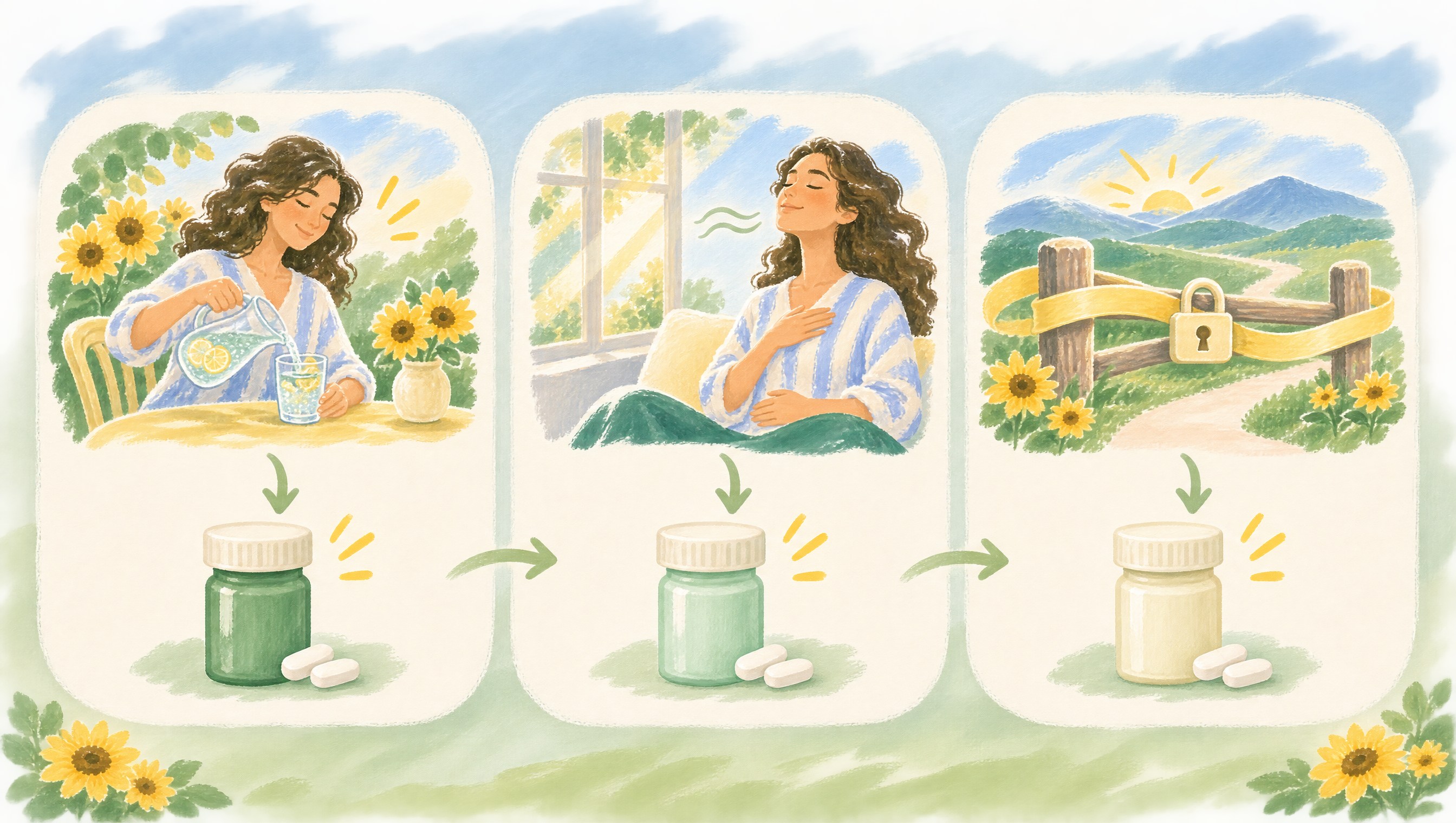
Acamprosate: the option for staying stopped#
Acamprosate is FDA-approved to help maintain abstinence in people who are already abstinent when treatment begins, and that remains its best-established clinical role. Its exact mechanism is not fully understood but is thought to involve glutamate and GABA signaling altered by chronic alcohol exposure.
The FDA label is specific about this: it's approved to help treat alcohol use disorder by maintaining abstinence in people who are already abstinent when they start, as part of a program that includes psychosocial support, which for many people means pairing it with counseling or a first support-group meeting.
Some studies also show reductions in heavy drinking. Still, acamprosate is generally not used as a medication for continuing to drink while simply cutting down, and it should not be described as directly treating anxiety, insomnia, or restlessness.
What it does reasonably well is help people who have already quit stay abstinent, with a number needed to treat of around 11 to 12 to prevent one person from returning to any drinking in the pooled trials.
Two practical catches. The dosing is heavy: two 333 mg tablets three times a day, which is six pills daily, and that schedule is one of the main reasons people drift off it. On the other hand, acamprosate is cleared by the kidneys rather than the liver, so it's often the safer pick if you have liver disease, but the dose should be adjusted in renal impairment and avoided in severe renal dysfunction.
One safety point belongs right here. If you've been drinking heavily every day, don't stop cold on your own, because alcohol withdrawal can be dangerous and in severe cases, life-threatening, with seizures. Detox should be medically supervised, and if someone is having a severe withdrawal reaction, call 911.
Disulfiram: the external guardrail#
Disulfiram is the oldest of the three, and it runs on a completely different principle, which is the fear of getting sick. Normally, your body breaks alcohol down in two steps, and disulfiram blocks the second one, so acetaldehyde, a toxic byproduct, piles up to levels five to ten times higher than usual.
The disulfiram-alcohol reaction described in the FDA label can range from flushing, headache, nausea, vomiting, and palpitations to severe low blood pressure, irregular heart rhythms, trouble breathing, cardiovascular collapse, seizures, unconsciousness, and, rarely, death. Alcohol-containing foods, medicines, mouthwashes, and other products may trigger a reaction, and sensitivity can persist for up to 14 days after disulfiram is stopped.
The research on disulfiram is where it gets strange. It doesn't touch craving at all, so whether it helps comes down to whether you actually take it. Poor adherence is the major limitation, and there is insufficient evidence from blinded trials.
A 2014 analysis of disulfiram trials found that in blinded studies, where neither patient nor researcher knew who was on the real drug, disulfiram looked no better than placebo, while in open-label studies, where people knew they were taking it, it did better than naltrexone and acamprosate, though these trials were few, varied, and prone to bias.
That pattern makes sense, because the threat of getting sick only changes behavior when you know the pill is working, which is why taking disulfiram does best when someone else, a partner or a clinic, supervises the daily dose.
Disulfiram is taken in oral form as a daily pill, generally for people set on stopping completely. It is contraindicated in people with psychosis or severe myocardial disease or coronary occlusion, and it also carries a risk of serious liver injury, including severe and occasionally fatal hepatitis, so it requires clinician screening and monitoring.
It's generally reserved for people committed to total abstinence who want a hard external barrier.
What about topiramate, gabapentin, and baclofen?#
Beyond the three approved drugs, clinicians regularly reach for a few other medications off-label, meaning the FDA hasn't cleared them for drinking specifically, even though there is evidence for their use.
Topiramate has the strongest case of the three: the VA and Department of Defense guideline actually ranks it alongside naltrexone as a first-line choice for moderate to severe AUD, which is unusual for an off-label drug, and the American Psychiatric Association guideline also suggests it as an option, with evidence that it may reduce heavy drinking and help people stay abstinent.
A coexisting condition for which topiramate is independently used, such as migraine, may influence medication choice, but it has not been established that people with migraine respond better to it for AUD. Important adverse effects include tingling, cognitive slowing, and metabolic acidosis, and topiramate can cause fetal harm, so pregnancy potential must be considered before prescribing.
Gabapentin is used off-label for AUD, and some evidence suggests particular benefit in people with prominent withdrawal-related symptoms. In a 2020 trial, 27% of people on gabapentin had no heavy drinking days, versus 9% on placebo; the benefit appeared only in those with the most withdrawal symptoms, and the trial was small.
It can cause dizziness and sedation and has recognized misuse and physical-dependence potential; respiratory depression is a concern, particularly when it is combined with opioids or other sedating drugs. It should not be used as a substitute for medical evaluation or appropriate treatment of potentially severe alcohol withdrawal.
Baclofen is also used, mostly in Europe, with studies in alcohol-dependent patients showing weaker evidence that remains mixed. Nalmefene is not FDA-approved for AUD in the United States.
In the European Union, it is approved to reduce alcohol consumption in selected adults with alcohol dependence who remain at a high drinking-risk level, do not have physical withdrawal symptoms or require immediate detoxification, and receive ongoing psychosocial support.
None of these is something to try on your own, since they're tools a prescriber weighs against your history, your other conditions, and whatever the approved options already did or didn't do.
So which medication is right for you?#
Treatment goal is an important part of choosing a medication, but it is not the only factor. A clinician also considers opioid use, liver and kidney function, pregnancy potential, cardiovascular and psychiatric conditions, withdrawal risk, other medications, prior treatment response, and how practical the dosing schedule will be.
The examples below describe common reasons a medication may be considered rather than a recommendation for any individual.
| Medication | How it works | Often considered for | Main upside | Main limitation |
|---|---|---|---|---|
| Naltrexone | Blunts alcohol's reward through opioid receptors | Cutting back, or still drinking and not ready to quit | Can be started without quitting first and can help decrease alcohol use; oral is daily, injection monthly; strongest on heavy drinking | Nausea early on; can't be started while using or dependent on opioids |
| Acamprosate | Thought to act on glutamate and GABA signaling altered by long-term drinking | Staying abstinent after you've already quit, including people with liver disease | No liver metabolism; best evidence for maintaining abstinence | Six pills a day; you have to quit first; not for severe kidney disease |
| Disulfiram | Makes drinking trigger an acute sick reaction | People set on full abstinence who want a deterrent, ideally supervised | Strong deterrent while it's taken, long track record | Does nothing for craving, only works if taken; reaction can be severe; not for psychosis or severe heart disease; liver risk |
| Topiramate (off-label) | Calms overactive brain signaling | Reducing heavy drinking; migraine or other conditions it treats may factor into the choice | Guideline-backed as first-line despite being off-label | Slow dose build-up, tingling, cognitive slowing, metabolic acidosis; can cause fetal harm |
| Gabapentin (off-label) | Eases nervous-system overactivity | People with prominent withdrawal-related symptoms | Some evidence in people with more withdrawal symptoms | Weaker evidence, used second-line; misuse and dependence potential; sedation |
- If you want to cut back, or you're still drinking and not ready to stop, naltrexone is often the first option discussed, since it works on heavy drinking and doesn't ask you to quit first.
- If you've already stopped and want to stay stopped, or you have liver disease, acamprosate may fit, as long as the six-pills-a-day schedule works for you and your kidneys are healthy enough.
- If you want a hard external barrier and know you'll take it, ideally with someone supervising, disulfiram can be that guardrail, after screening for heart, liver, and psychiatric conditions.
- If the first-line options didn't work or can't be used, topiramate is worth raising with a prescriber.
More than one medication may be reasonable for a given patient, and switching to another option is common when the first medication is ineffective, poorly tolerated, contraindicated, or impractical.
When researchers compared naltrexone and acamprosate head-to-head, they found no clear overall winner between them, so the decision often comes down to your health history, your goal, the side effects you can live with, and how often you can realistically remember a pill. Studies of both naltrexone and acamprosate together also did not clearly outperform either one alone.
The National Institute on Alcohol Abuse and Alcoholism and the Substance Abuse and Mental Health Services Administration support using FDA-approved medications to treat AUD, often together with counseling or other behavioral support, and a health care professional can help people choose a treatment that fits their goals. Alcoholics Anonymous is one common support option as well.
Getting naltrexone through telehealth#
Naltrexone works for many people, but most people who could use it never get it, for many reasons, including stigma, readiness, cost, and finding a prescriber who thinks to offer it.
Sunflower Clinic offers naltrexone over telehealth. Prescribing depends on a clinician's evaluation, and not everyone is an appropriate telehealth candidate: people at risk for dangerous alcohol withdrawal, or with conditions that rule out naltrexone, may need a different level of care.
You start with a $20 online assessment, and if a clinician prescribes naltrexone, the program runs $89 a month billed quarterly, with the medication, a care team, and ongoing support included and shipping free.
If your goal is to drink less without putting the rest of your life on hold to do it, take a look at how the naltrexone program works and what starting actually involves.
Questions people ask before starting a medication for drinking#
Do any of these medications cure alcohol use disorder?#
No. None of the three is a cure for alcohol use disorder (AUD), and the disulfiram label says so outright. They're tools for managing a chronic condition that ranges from mild to severe, and they work best combined with counseling or support like Alcoholics Anonymous. Many people stay on them for months or longer.
Can I take medication if I don't want to quit drinking completely?#
Yes, and this is where naltrexone stands out. You can start oral naltrexone while still drinking, and it can reduce the amount of alcohol consumed as well as heavy drinking, so it suits many people whose goal is to cut back rather than stop entirely. Acamprosate and disulfiram, by contrast, are both built around abstinence.
Which medication works best?#
Naltrexone and acamprosate are the best-studied AUD medications, though the benefits are modest. The APA recommends both as first-line options, while the VA/DoD guideline prefers naltrexone or topiramate and rates acamprosate as a weaker option. When compared directly, neither has been shown to clearly beat the other.
Providers often pair medication with behavioral support, and APA and VA/DoD guidelines support combining medication with psychosocial treatment for AUD. Naltrexone has more evidence for reducing heavy drinking, acamprosate for holding onto abstinence you've already reached, and disulfiram can work well but only if it's taken reliably.
The best choice for any one person also depends on their health history and other medications.
Are these medications addictive?#
Naltrexone, acamprosate, and disulfiram, the three FDA-approved AUD medications, are not controlled substances and are not considered habit-forming. That should not automatically be applied to every off-label medication discussed here; gabapentin, for example, has recognized misuse and physical-dependence potential.
Do I need to detox before starting?#
It depends on the drug. Acamprosate is meant to start after you've stopped and come through withdrawal. Disulfiram requires being alcohol-free for at least 12 hours before the first dose.
Oral naltrexone doesn't require you to quit first. Anyone drinking heavily every day should detox under medical supervision, since withdrawal can be dangerous.
References#
- Naltrexone hydrochloride tablet. DailyMed. US National Library of Medicine. https://dailymed.nlm.nih.gov/dailymed/drugInfo.cfm?setid=49aa3d6d-2270-4615-aafa-b440859ab870. Accessed November 3, 2026.
- Acamprosate calcium delayed-release tablet. DailyMed. US National Library of Medicine. https://dailymed.nlm.nih.gov/dailymed/drugInfo.cfm?setid=9803db35-2600-4f42-80c1-43216fd1ba3d. Accessed November 3, 2026.
- Disulfiram tablet. DailyMed. US National Library of Medicine. https://dailymed.nlm.nih.gov/dailymed/drugInfo.cfm?setid=b90f8ff4-4fb3-46ab-8149-cb55f24a4044. Accessed November 3, 2026.
- Management of Substance Use Disorders: guidelines from the VA/DoD. Am Fam Physician. 2022;106(4):466-469. https://www.aafp.org/afp/2022/1000/practice-guidelines-substance-use-disorders. Accessed November 3, 2026.
- Reus VI, Fochtmann LJ, Bukstein O, et al. The American Psychiatric Association Practice Guideline for the Pharmacological Treatment of Patients With Alcohol Use Disorder. Am J Psychiatry. 2018;175(1):86-90. doi:10.1176/appi.ajp.2017.1750101
- McPheeters M, O'Connor EA, Riley S, et al. Pharmacotherapy for alcohol use disorder: a systematic review and meta-analysis. JAMA. 2023;330(17):1653-1665. doi:10.1001/jama.2023.19761
- Jonas DE, Amick HR, Feltner C, et al. Pharmacotherapy for adults with alcohol use disorders in outpatient settings: a systematic review and meta-analysis. JAMA. 2014;311(18):1889-1900. doi:10.1001/jama.2014.3628
- Skinner MD, Lahmek P, Pham H, Aubin HJ. Disulfiram efficacy in the treatment of alcohol dependence: a meta-analysis. PLoS One. 2014;9(2):e87366. doi:10.1371/journal.pone.0087366
- Anton RF, Latham P, Voronin K, et al. Efficacy of gabapentin for the treatment of alcohol use disorder in patients with alcohol withdrawal symptoms: a randomized clinical trial. JAMA Intern Med. 2020;180(5):728-736. doi:10.1001/jamainternmed.2020.0249
- Holt S. Medications for alcohol use disorder. JAMA. 2026;336(16):1463. doi:10.1001/jama.2026.10575
- National Institute on Alcohol Abuse and Alcoholism. Alcohol treatment in the United States. Updated March 2026. Accessed November 12, 2026. https://www.niaaa.nih.gov/alcohols-effects-health/alcohol-topics/alcohol-facts-and-statistics/alcohol-treatment-united-states