
Nausea is one of the most common complaints with naltrexone, and it was the most frequent side effect in the main safety study in people with alcohol use disorder. It was reported by about 1 in 10 people in one large safety study, and it tends to be most noticeable early in treatment.
It is usually mild enough to ride out: in two 12-week alcohol-dependence trials described in the prescribing information, 5 of 93 participants receiving naltrexone discontinued treatment because of nausea.
Most people tolerate oral naltrexone reasonably well. In the two small 12-week alcohol-dependence trials described in the label, no serious adverse events were reported among the 93 participants receiving naltrexone, although studies of that size cannot rule out uncommon harms.
Larger randomized-trial evidence has likewise not shown an increased overall risk of serious adverse events compared with placebo. In practice, mild complaints such as nausea often ease over time, and taking the dose with food can help. Persistent symptoms are worth discussing with your prescriber.
Sunflower provides a compounded naltrexone formulation (45 mg of naltrexone plus 5 mg of vitamin B6). If you want the background first, our piece on how naltrexone works for alcohol covers the mechanism, and the naltrexone program page covers how to get it.
What side effects naltrexone actually causes#
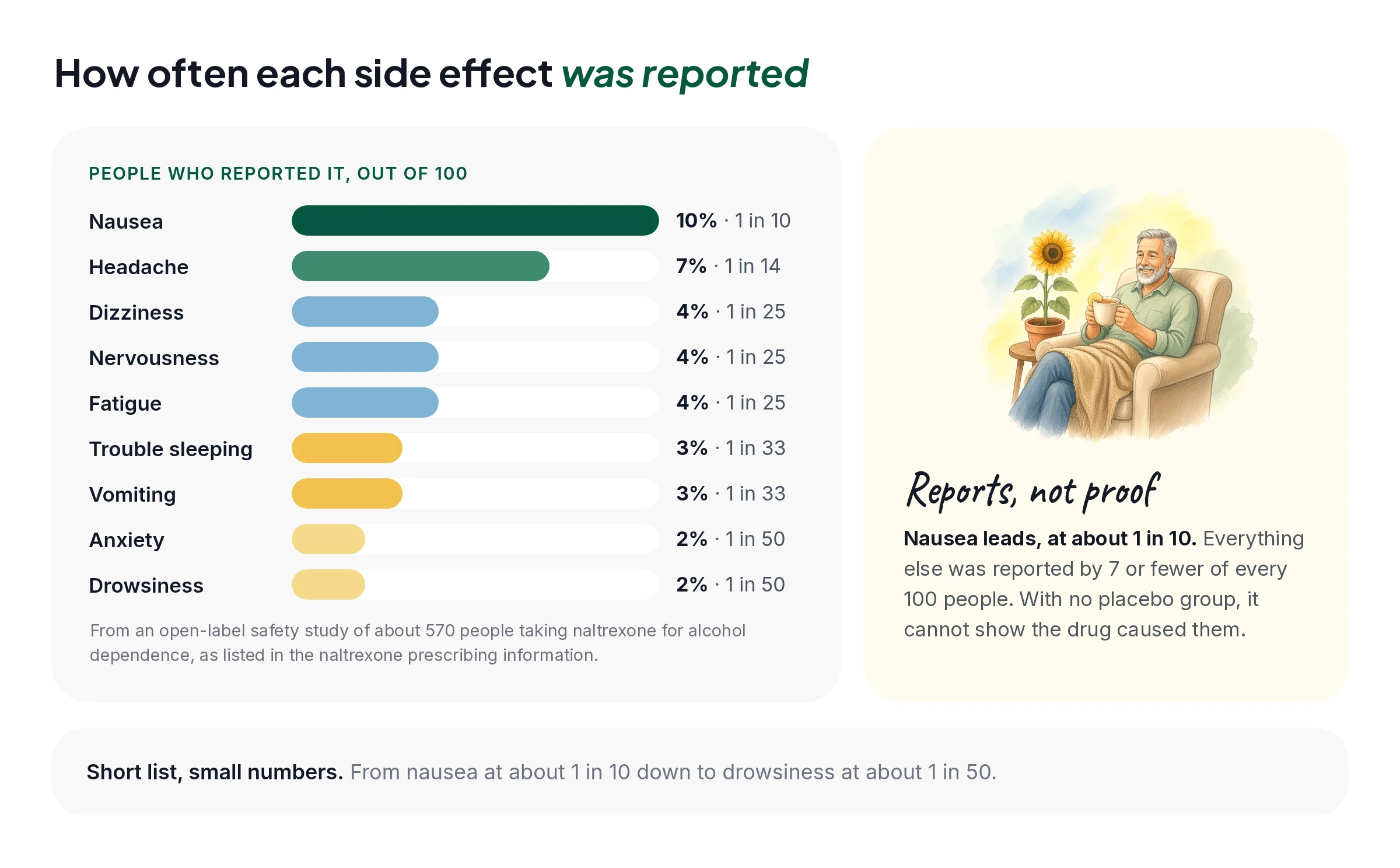
In an open-label safety study of about 570 people receiving naltrexone for alcohol dependence, new-onset nausea was reported in 10%, headache in 7%, dizziness, nervousness, and fatigue in 4% each, insomnia and vomiting in 3%, and anxiety and drowsiness in 2%.
Because the study did not include a placebo comparison, these percentages describe symptoms reported during treatment and do not prove that every event was caused by naltrexone.
Most published safety data for oral naltrexone come from studies of the FDA-approved 50 mg tablet. A few trials, such as COMBINE, used higher doses. Sunflower provides a compounded 45 mg naltrexone formulation that also contains 5 mg of vitamin B6.
This specific formulation has not been evaluated in the same clinical trials as the approved 50 mg tablet, so its exact adverse-event rates cannot be assumed to be identical. The known adverse effects and safety precautions associated with naltrexone remain relevant.
Put against a placebo, the list gets shorter. The complaints that clearly track with naltrexone are nausea, vomiting, and dizziness. A 2023 review of 118 trials found each of these more common with naltrexone than with placebo. Abdominal pain, reduced appetite, and daytime sleepiness or tiredness also show up more often than with placebo.
An earlier large review put numbers on it: for roughly every 9 people who take naltrexone, about one extra person gets nausea compared with placebo, and a smaller share, roughly 1 in 15 to 1 in 20, has extra dizziness. Vomiting is also more common, though the exact figure varies by review.
There is an old worry that naltrexone is a harsh drug. A systematic review of 89 placebo-controlled trials with more than 11,000 people found no evidence that oral naltrexone causes more serious adverse events than placebo. Only 26 of those trials reported serious events, and the review excluded people who use opioids.
When the side effects start, and when they stop#
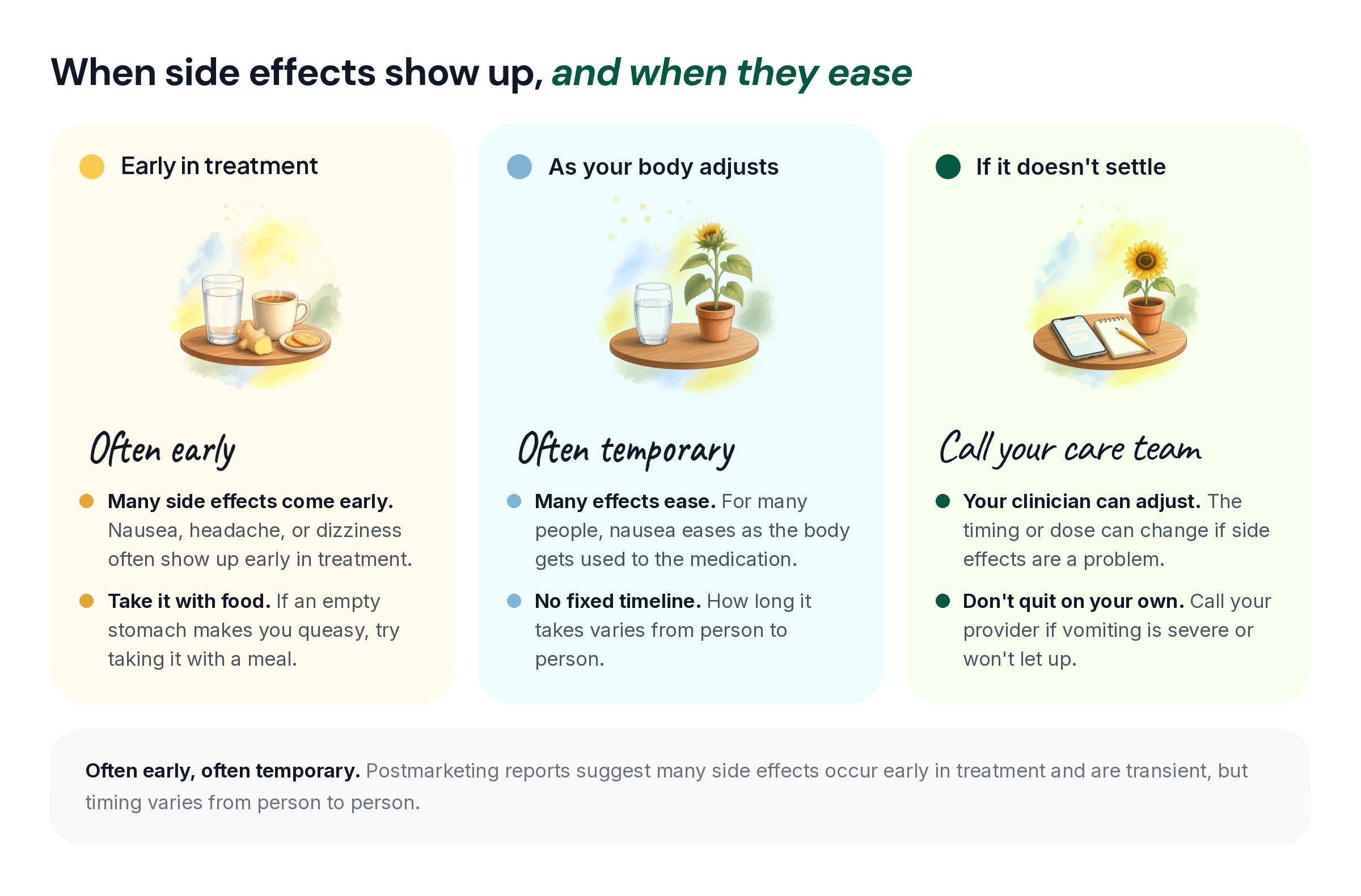
Postmarketing reports suggest that many adverse effects occur early in treatment and are transient. There is no fixed timeline, however, and how long symptoms last varies from person to person.
That early stretch is also when cravings can run loudest, so it helps to have a plan ready for handling a craving in the moment.
Nausea, the one that matters most#
Nausea is the side effect worth planning around, because it is among the most common and can lead some people to stop the drug.
A few things help: you can take naltrexone with or without food, so if an empty stomach makes the nausea worse, take it with a meal. The label describes flexible dosing schedules, such as every other day, mainly for supervised dosing. Your clinician can still adjust the timing or dose if side effects are a problem, so these are not reasons to quit on your own.
For many people, the nausea eases as the body gets used to the medication. If vomiting is severe or will not let up, call your provider.
This is where a care team helps more than a pill in the mail: Sunflower's plan pairs the prescription with ongoing support and optional therapy, plus the option to lean on a first support group, so the rough early stretch is not something you white-knuckle alone.
Headache, dizziness, and feeling tired or wired#
The next group is usually mild: headache, dizziness, fatigue, and trouble sleeping, which were each reported by roughly 3% to 7% of people in the label's open-label safety study. Pooled across 50 studies, the effects that stood out beyond nausea were mild stomach upset and some tiredness.
Dizziness and drowsiness are worth respecting early. Give yourself a sense of how the medication affects you before driving or doing anything where a wave of dizziness would be a problem.
Sleep can go either way. Some people feel wired, some feel sleepy, and if the dose timing seems to be the cause, that is another thing a prescriber can shift.
Some symptoms that occur after reducing or stopping alcohol, such as nausea, anxiety, sweating, tremor, insomnia, or a fast heartbeat, can be alcohol-withdrawal symptoms rather than naltrexone side effects.
Alcohol withdrawal can sometimes become dangerous, and naltrexone does not treat acute withdrawal. If you have been drinking heavily or regularly and are cutting down or stopping, tell your clinician. Seizures, hallucinations, severe confusion, or other severe or rapidly worsening symptoms need urgent medical evaluation: call 911 or go to the nearest emergency department.
What about your liver?#
Naltrexone has a reputation for being hard on the liver.
Naltrexone carries a warning about hepatitis and clinically significant liver dysfunction in its FDA label. Dose-related liver-enzyme elevations were demonstrated in a study using 300 mg a day, well above the usual 50 mg daily dose used for alcohol use disorder, but liver problems have also been reported during clinical use.
Many reported cases had other possible causes, including alcohol-related liver disease, hepatitis B or C, or other medications that can affect the liver.
At standard doses, clinically apparent liver injury caused by naltrexone appears to be uncommon, and mild liver-enzyme elevations are often temporary, according to the NIH's drug-injury database.
That matters for anyone starting it for drinking, since heavy drinking strains the liver on its own. It is one reason your provider may check your liver before and during treatment, and a good reason to share how much you have been drinking. Sunflower's clinical safety page covers what gets checked before you start.
Call your provider right away if you notice signs of liver trouble, such as yellowing of the skin or eyes, dark urine, pale stools, pain in the upper right side of your belly, unusual tiredness, or stomach pain that lasts more than a few days. Easy bruising or bleeding can also happen with serious liver problems, so mention it too.
The interaction people do not see coming#
Naltrexone's biggest safety point involves opioids. Naltrexone blocks opioid receptors. If you are physically dependent on opioids, starting naltrexone before enough time has passed since your last opioid use can trigger sudden and sometimes severe withdrawal.
For people previously dependent on short-acting opioids, labeling recommends an opioid-free interval of at least 7 to 10 days; after buprenorphine or methadone, vulnerability to precipitated withdrawal can persist for as long as two weeks.
That is also why treatment guidelines say not to start naltrexone if you use opioids or expect to need them.
Opioids hide in more places than people expect. Prescription painkillers, yes, but also some cough and cold medicines and anti-diarrhea products. Tell the clinic everything you take, prescription and over the counter.
The block runs the other way too: while you are on naltrexone, opioid painkillers will not work normally, and taking more to push past the block is dangerous. If you ever need emergency pain care, tell the team you take naltrexone.
There is another opioid risk after naltrexone is stopped or interrupted. If you previously used opioids, your tolerance may be lower, so an opioid dose you once tolerated can cause a life-threatening overdose.
If you have a history of opioid use or may be exposed to opioids, discuss overdose prevention with your clinician, including whether you should have an opioid-overdose reversal medication such as naloxone available.
When to treat it as an emergency#
Most of what you will feel is mild, but a few symptoms need faster action, and they are worth knowing by name.
Call 911 if you have signs of a serious allergic reaction, such as trouble breathing or swelling of the face, lips, tongue, or throat.
If you have thoughts of suicide or harming yourself, call or text 988 in the US for immediate crisis support. If you are in immediate danger, have made an attempt, or cannot stay safe, call 911 or go to the nearest emergency department.
Depression and suicidal thoughts have been reported during alcohol treatment across naltrexone, placebo, and comparison groups, with no proven link to the drug, and naltrexone does not treat those thoughts. Take them seriously and get help.
Signs of liver trouble, like yellow skin or eyes, dark urine, or pain on the upper right of your belly, are a reason to stop the medication and call your provider the same day.
Seizures, hallucinations, or severe confusion after cutting down or stopping alcohol can be signs of dangerous withdrawal. Call 911.
The realistic picture#
Many people have no side effects or only mild ones. When side effects occur, nausea is among the most common and often improves over time. Serious complications are uncommon, but appropriate screening for opioid exposure, liver disease, alcohol-withdrawal risk, and other individual factors remains important. Screening and follow-up can reduce these risks but cannot eliminate them completely.
Whether naltrexone is appropriate for you depends on factors including opioid exposure, alcohol-withdrawal risk, liver health, other medications, and your medical history. Do not start, stop, or change a prescription medication without guidance from your prescribing clinician.
If you are weighing it up, the next step is an online assessment with a licensed clinician, who decides whether naltrexone is appropriate for you. Sunflower's naltrexone program is $20 for the assessment, then $89 a month on the quarterly plan for a 90-day supply delivered to your door if you are prescribed it, with a clinician who adjusts things if side effects hit. See how Sunflower's naltrexone program works.
Questions people ask before starting naltrexone#
How long do naltrexone side effects last?
Postmarketing reports suggest many side effects come early in treatment and are transient. There is no fixed timeline, and how long they last varies from person to person.
What is the most common side effect of naltrexone?
Nausea. In alcohol-treatment studies it was among the most reported side effects. Taking the tablet with food may help, and it often improves over time.
Can naltrexone damage your liver?
Naltrexone carries a warning about hepatitis and clinically significant liver dysfunction. At the standard 50 mg dose, clinically apparent liver injury caused by naltrexone appears to be uncommon, and mild enzyme rises are often temporary.
Clear dose-related enzyme rises were seen at 300 mg a day, but liver problems have also been reported during clinical use, often with other possible causes. Providers may check your liver, partly because heavy drinking strains it on its own.
Should you take naltrexone with or without food?
Either works. If it makes you queasy on an empty stomach, taking it with a meal is an easy fix to try.
What should you not take with naltrexone?
Opioids. Naltrexone can trigger sudden withdrawal if you are dependent on opioids and start it too soon after your last opioid use. That is why you need to be opioid-free for at least 7 to 10 days after short-acting opioids before starting, and longer, up to two weeks, after buprenorphine or methadone.
This includes some cough, cold, and anti-diarrhea medicines that contain opioids, so check labels and ask your pharmacist before taking them. Tell your prescriber everything you take.
Do side effects mean naltrexone is working?
No. Naltrexone is thought to work by blunting the reward you get from alcohol, which is a separate thing from whether your stomach is upset. Feeling side effects is not a sign it is working, and feeling none is not a sign it is failing.
References#
- Naltrexone hydrochloride tablet, film coated [prescribing information]. Durham, NC: Accord Healthcare, Inc.; revised October 2025. DailyMed, National Library of Medicine. https://dailymed.nlm.nih.gov/dailymed/drugInfo.cfm?setid=49aa3d6d-2270-4615-aafa-b440859ab870. Accessed November 1, 2026.
- Reus VI, Fochtmann LJ, Bukstein O, et al. The American Psychiatric Association practice guideline for the pharmacological treatment of patients with alcohol use disorder. Am J Psychiatry. 2018;175(1):86-90. doi:10.1176/appi.ajp.2017.1750101
- Naltrexone. In: LiverTox: Clinical and Research Information on Drug-Induced Liver Injury. Bethesda, MD: National Institute of Diabetes and Digestive and Kidney Diseases; updated March 24, 2020. https://www.ncbi.nlm.nih.gov/books/NBK548583/. Accessed November 1, 2026.
- Naltrexone. In: MedlinePlus. Bethesda, MD: National Library of Medicine; revised September 15, 2026. https://medlineplus.gov/druginfo/meds/a685041.html. Accessed November 1, 2026.
- McPheeters M, O'Connor EA, Riley S, et al. Pharmacotherapy for alcohol use disorder: a systematic review and meta-analysis. JAMA. 2023;330(17):1653-1665. doi:10.1001/jama.2023.19761
- Jonas DE, Amick HR, Feltner C, et al. Pharmacotherapy for adults with alcohol use disorders in outpatient settings: a systematic review and meta-analysis. JAMA. 2014;311(18):1889-1900. doi:10.1001/jama.2014.3628
- Rösner S, Hackl-Herrwerth A, Leucht S, Vecchi S, Srisurapanont M, Soyka M. Opioid antagonists for alcohol dependence. Cochrane Database Syst Rev. 2010;(12):CD001867. doi:10.1002/14651858.CD001867.pub3
- Bolton M, Hodkinson A, Boda S, et al. Serious adverse events reported in placebo randomised controlled trials of oral naltrexone: a systematic review and meta-analysis. BMC Med. 2019;17(1):10. doi:10.1186/s12916-018-1242-0
- Anton RF, O'Malley SS, Ciraulo DA, et al. Combined pharmacotherapies and behavioral interventions for alcohol dependence: the COMBINE study: a randomized controlled trial. JAMA. 2006;295(17):2003-2017. doi:10.1001/jama.295.17.2003
- US Food and Drug Administration. Compounding and the FDA: questions and answers. Accessed November 12, 2026. https://www.fda.gov/drugs/human-drug-compounding/compounding-and-fda-questions-and-answers