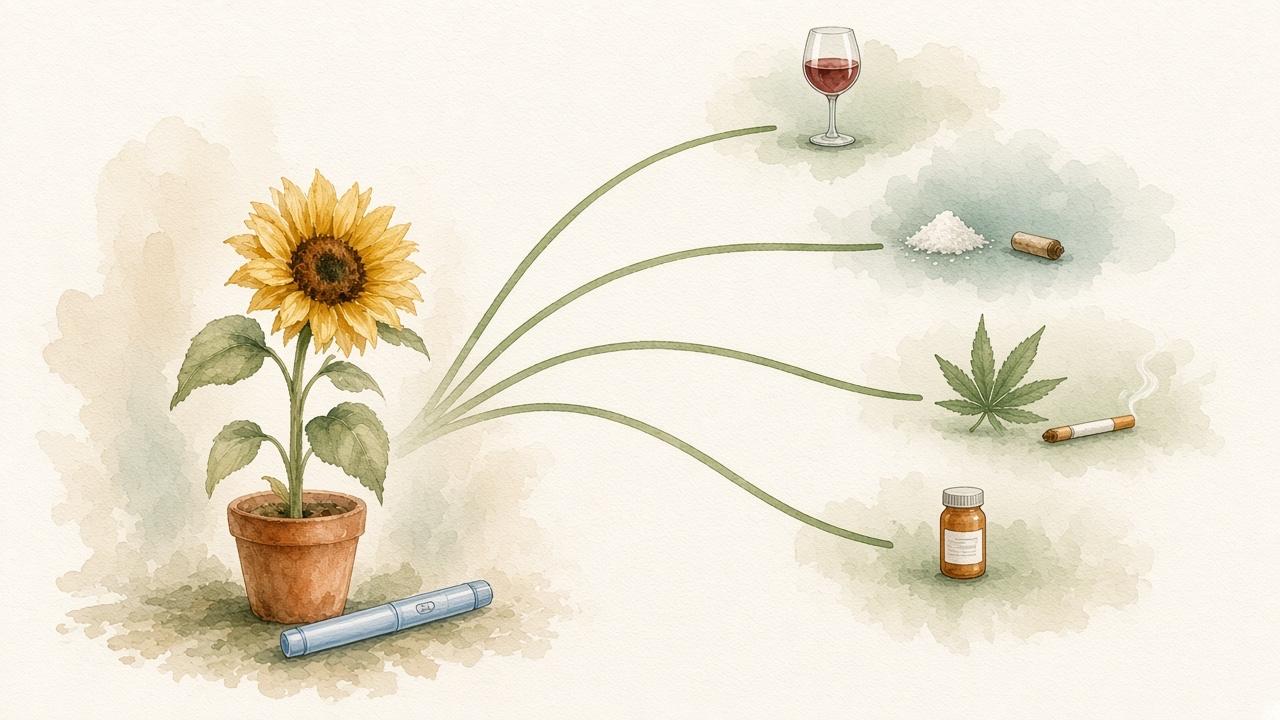

You notice that alcohol occupies less of your attention. The urge to drink feels quieter. Yet when you finish work, start dinner, or settle onto the couch, reaching for a drink still feels like the natural thing to do.
That experience is worth discussing with your care team. Naltrexone can reduce alcohol cravings, while familiar situations can continue to bring up thoughts and feelings associated with drinking.,
Why does the evening routine still feel so familiar?#
An evening drink may have become linked with a particular time, place, person, or activity. Internal experiences have an influence, too: frustration, excitement, tension, or a passing thought can bring alcohol to mind. Craving can include thoughts and emotions as well as physical sensations, so habit and craving can overlap.
You might find yourself thinking, “This is when I finally get a break.” Or the association may be harder to name: you enter the kitchen and begin the usual sequence before thinking much about it.
Consider this fictional example.
Someone arrives home, puts their bag on the counter, and starts preparing dinner. They have noticed less desire for alcohol since starting treatment. Still, they reach for a wineglass from the cabinet almost automatically. Their evening routine contains the same tasks, the same room, and the same expectation that pouring a drink means the workday is over.
It's useful to begin with curiosity: What does this moment offer? A pause? Some reward to anticipate? A transition into the evening?
The answer will differ from person to person.
What can therapy help you understand?#
Alcohol-focused cognitive behavioral therapy, or CBT, includes identifying thoughts, feelings, behaviors, and situations connected with drinking and developing ways to respond. These conversations can help make a familiar sequence easier to examine.
You could bring one recent evening to a session and say:
“The medication seems to be helping with the urge to drink, but I’d like help understanding why I still feel the impulse to reach for a drink when I start making dinner.”
Your therapist might ask what happened leading up to that moment, what you expected the drink to do for you, and what happened afterward. An evening when things felt easier can be useful to discuss, too.
It might not be a dramatic explanation. Perhaps you were simply exhausted from the day. Perhaps you wanted company. Perhaps alcohol was just there and the routine was familiar. You can explore these possibilities without deciding in advance what the answer should be.
If reviewing an evening becomes overwhelming, you can slow down or pause. It is reasonable to work through a small part of the sequence at a time.
How do you choose a different evening routine?#
Start with what you want from an alternative evening routine. NIAAA recommends considering activities and coping strategies that address the situations in which drinking usually occurs.
For the person in the fictional example, a complicated evening schedule might add more work. A brief transition could be more realistic: putting their work phone away, changing into comfortable clothes, and sitting for a few minutes before beginning dinner.
Someone who feels isolated might prefer to plan a conversation with a friend. Someone who enjoys preparing a drink might want to experiment with a nonalcoholic option, while noticing whether that ritual feels helpful or brings alcohol more strongly to mind.
These are possibilities to discuss. Your preferences, responsibilities, mobility, finances, and living situation all belong in the plan. If five quiet minutes are unrealistic because you are caring for children or sharing a crowded home, that is useful information.
What does a small experiment look like?#
Choose one part of the evening and decide what you want to try. For example:
“On Tuesday and Thursday, when I finish work, I’ll put my phone on its charger and listen to one song before starting dinner. I want to see whether that gives me a sense that work has ended.”
This fictional plan is deliberately specific. It gives the person and therapist something concrete to review. It does not promise that listening to a song will prevent drinking.
Afterward, a few reflections may help:
- What did I notice before I tried the experiment?
- Did the change provide anything I needed?
- What happened with drinking that evening?
- What would make the plan more realistic?
A note on your phone or a sentence jotted down in a journal to remember for the next session is enough. Detailed tracking is optional.
What if the new routine helps only a little?#
Bring that result into the conversation. A plan may need adjustment because the timing was wrong, the activity was unsatisfying, or the evening involved something the plan did not address.
If you drank, review the amount, circumstances, and any safety concerns. Also notice whether you recognized the pattern sooner, reached out for support, or identified an obstacle you had previously missed. Those observations can guide the next decision alongside your drinking goals.
Treatment can be adjusted to your needs. Medication, behavioral treatment, and peer support are options to discuss, with the combination guided by your circumstances and preferences.
When should you involve your prescriber?#
Tell your prescriber what has improved, what remains difficult, and whether you have side effects or trouble following the prescription as written. Discuss changes to medication with them rather than adjusting it on your own.
Naltrexone does not treat alcohol withdrawal. If you may be physically dependent on alcohol or have experienced withdrawal before, get medical guidance before abruptly reducing or stopping drinking. Seizures, hallucinations, or severe confusion during possible withdrawal require emergency help - call 911.,
The urge may diminish before the emotional and behavioral patterns surrounding it shift. Therapy can help us understand the difference. In your next session, consider starting with a simple observation: “The urge has changed, but this part of my evening still feels difficult.”